
Moran
“Gone with the Wind” modeled after Moran
Reprinted from the August 11,
2010, edition of "The Georgia Post."
By Billy Powell
Billy Powell, author of four books and religious columnist for “The Georgia Post,” enjoys researching and documenting local history.
Several months ago, former Crawford County Commissioner Paul Spillers suggested I do a story on Moran and what a worthwhile suggestion it turned out to be. For the first time, Crawford Countians will learn some interesting and intriguing history about Moran that may never have surfaced.
Moran in Post Civil War Era
Located on the northeastern tip of Crawford County near the Monroe
County line is the historic town of Moran, Georgia. Moran, approximately six
miles east of Musella, first appeared on the Georgia map in 1900. This central
area of the former town was situated one mile north of the intersection where
Moran Road feeds into East Hopewell Road. In the post Civil War era, Moran
featured a post office, railroad depot, general store, peach packing house,
grist mill, and several antebellum homes.
M&B Railroad Comes to Moran
in 1890
The Macon and Birmingham (M&B) Railroad completed laying its tracks
through Moran around 1890 and built the railroad depot about the same time.
Although originally intended to extend from Macon to Birmingham, the M&B rail
line stopped at LaGrange. Mrs. Lillian Pierson Breedlove, the current matriarch
of Moran, born there in 1921, stated that Crawford Countians would catch the
train from Macon to Moran, and then have their Knoxville and Roberta relatives
pick them up in horse-driven buggies. The M&B encountered financial difficulties
and went out of business in 1922.
Named after Moran Family
The settlement was referred to as the Moran community as early as 1850
when Augustus Benjamin Moran (1822-1874) and his wife Caroline Elizabeth Simmons
(1824-1904) were living there and raising a family; they were married in 1841.
Legend has it that the ancestors of the Moran family settled there in the early
1800s and that they came at the invitation of Colonel Benjamin Hawkins, the
Creek Indian agent; Hawkins was the first white man to set foot in Crawford
County, circa 1800. Before Hawkins’ arrival, Crawford County was inhabited by
Indians. Since the town wasn’t officially designated by the Postal
Department until 1897, it was likely named after Augustus Benjamin Moran and his
son, Thomas Jefferson Moran, both of whom were prominent leaders in the
community. In the 1850 census, Augustus Benjamin Moran was 28 years old, his
wife Caroline was 26, and they had three children: William-7, Andrew-5, and
Elizabeth-2. Not yet born was Thomas Jefferson Moran (1853-1932), who became
Moran’s first postmaster, the railway station manager, a general store owner,
and a farmer.
Post Office Established in
1897
The name of a community becomes official when it receives a postal
designation. Thus, on 26 May 1897, a certificate signed by the Postmaster
General of the United States, James A. Gary, established Moran as a postal
address and appointed Thomas J. Moran, the son of Augustus and Caroline Moran as
its first postmaster. After Thomas Moran’s death in 1932, the Post Office
Department appointed J. L. Andrews as postmaster. After Andrews retired, he was
succeeded by Thomas Moran’s daughter Daisy. She remained in that capacity until
the post office closed in 1955. Its closure necessitated that Musella assume
responsibility for Moran’s postal service, thus Moran’s postal address changed
to Musella, Georgia.
Thomas J. Moran Family
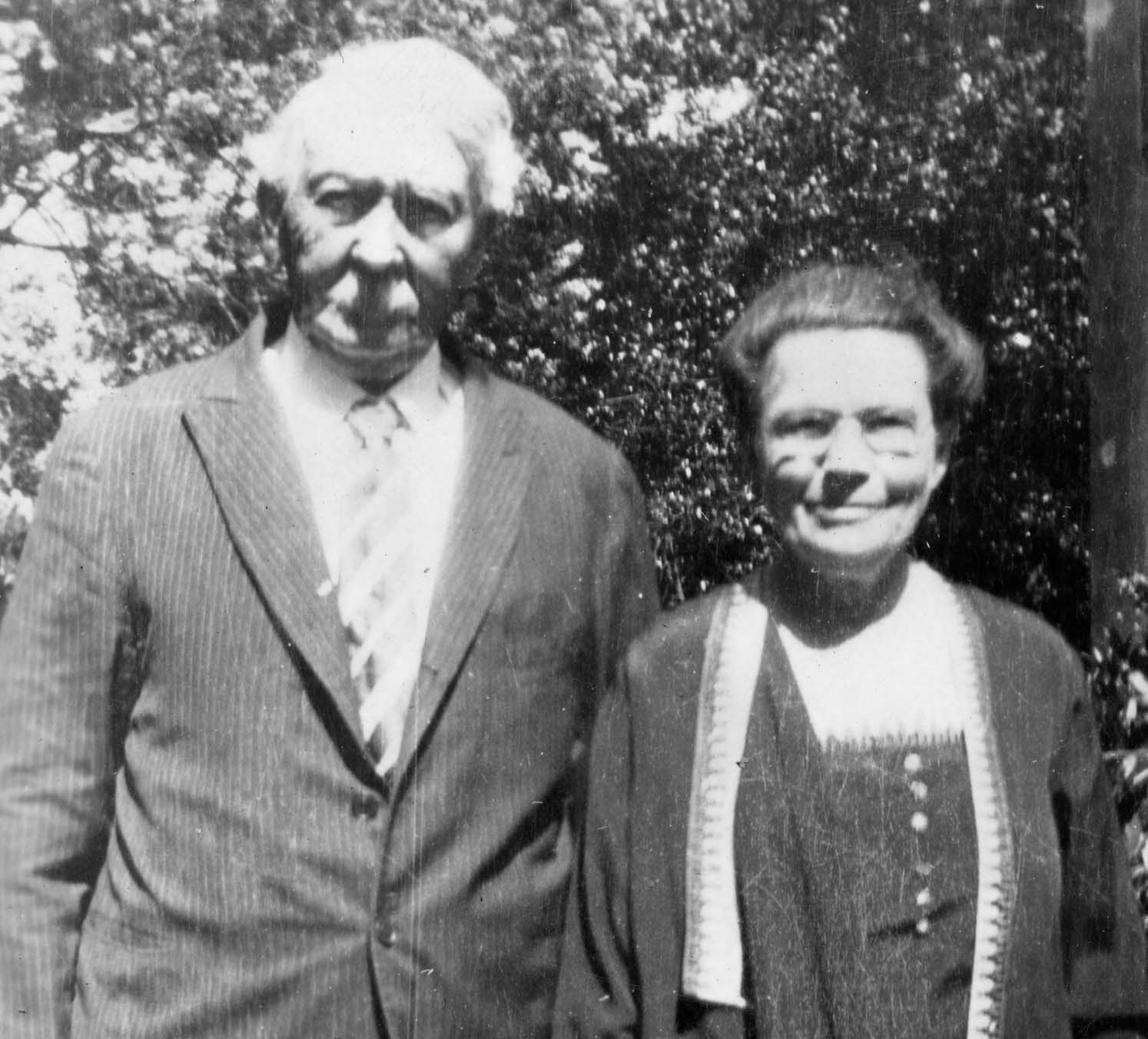
Thomas J. Moran (1853-1932), the son of Augustus Benjamin and Caroline
Elizabeth Moran, married Alice Leola Yates (1871-1963) in 1895. This union
produced four daughters: Lillian, Daisy, Lena, and Ann. John Oakey, the son of
their youngest daughter, Ann Moran Oakey (1912- 1966) and the only grandchild of
Thomas and Alice Moran, now owns the former Moran home and its surrounding
property. John and his wife Sharon live in Peachtree City. John’s website on
the Moran and Oakey families is
www.allourfamily.us.
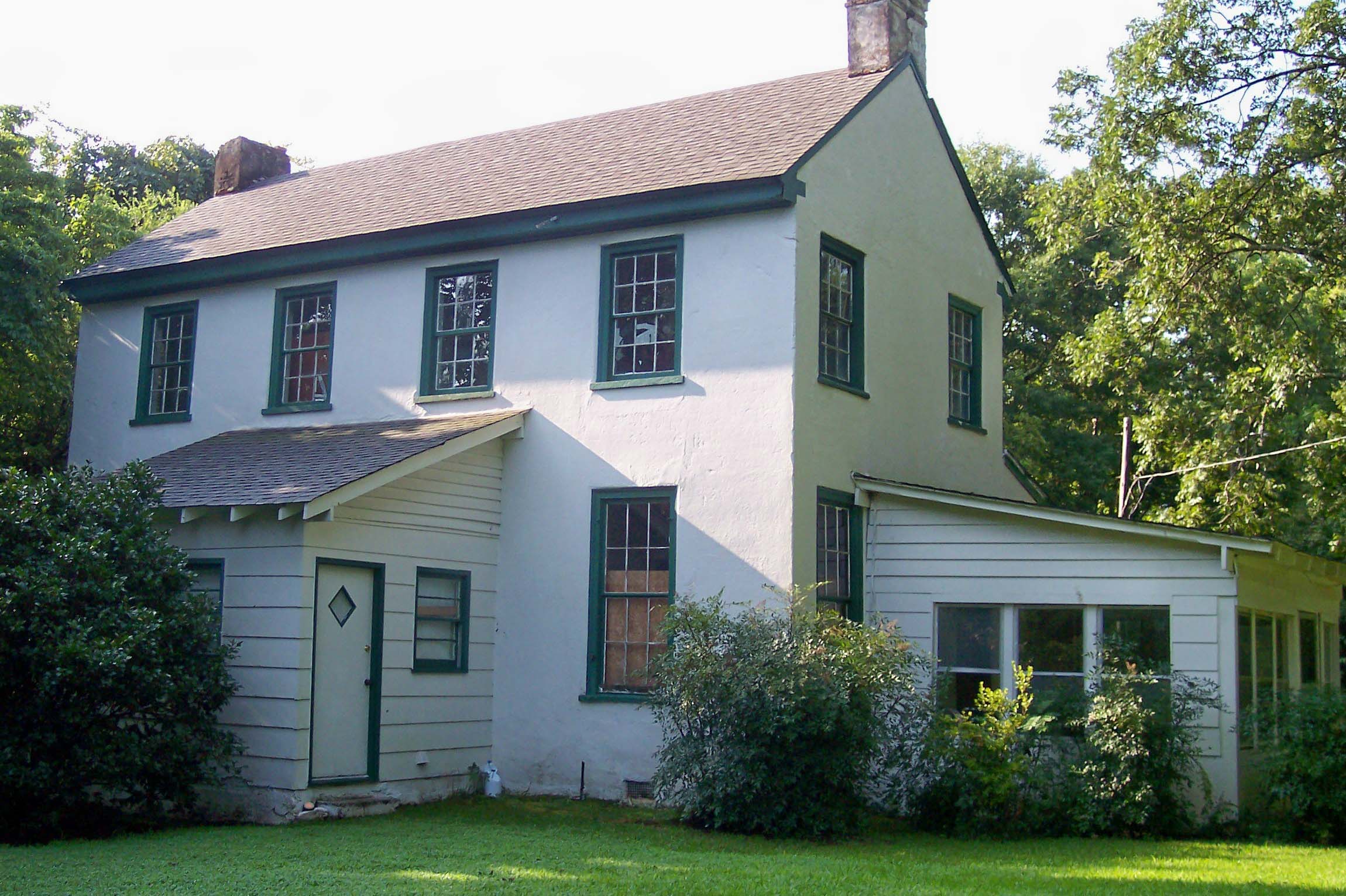
The 188-year-old Moran
House
The pre-Civil War Moran house is 188 years old and still standing.
The house took seven years to build. The construction project began in 1815 and
concluded in 1822. The house, built expressly for William and Bethiah Pierson
Simmons, was constructed by a German carpenter using slave labor. Its walls were
made of hand-fired brick and measured two feet thick. The house was plastered
inside and stuccoed outside. Inside the house were four fireplaces, all uniquely
constructed. When Augustus Benjamin Moran and Caroline Elizabeth Simmons married
in 1841, the house was given to them as a wedding present by the bride’s
parents, William and Bethiah Pierson Simmons. After Augustus’ death in 1874,
his wife Caroline lived there another 30 years until her passing in 1904. After
her death, her son, Thomas J. Moran and his wife Alice became the principal
occupants of the house. The house was located a half mile north of the original
post office building where Thomas Moran worked. Often, he would walk to work.
Thomas went to be with the Lord in 1932 and his wife, Alice, lived there another
31 years until her passing in 1963 at the age of 92. John Oakey, grandson of
Thomas and Alice Moran, periodically comes down to mow the grass and maintain
the premises.
Moran House was Margaret
Mitchell’s “Tara”
There has been strong speculation over past decades that Margaret
Mitchell used stories about life in Moran as a guide in writing about the old
south in her famous novel, “Gone with the Wind.” This novel was published in
1936. A block-buster movie by the same title hit the theater marquees in 1939.
It is thought that Mitchell modeled the fictional ‘Tara Plantation” after the
old Moran house and farm. Woven into Mitchell’s novel was a southern plantation
like the one at Moran, which had suffered the harsh realities of the Civil War.
How did Margaret Mitchell learn about Moran? Well, it turned out that
Margaret’s brother, Steve Mitchell, an Atlanta lawyer, was a close friend of
Judson Andrews, who was the husband of Lillian Moran, the oldest daughter of
Thomas and Alice Moran. Judson was a gregarious and popular Atlanta attorney
(considered a gubernatorial candidate at one time), who regularly regaled Steve
and Margaret Mitchell with stories about life in Moran, which typified the old
south and its involvement in the Civil War. During the 1950s, along came Susan
Myrick (1893-1978), the renowned Macon Telegraph writer and a friend of author
Margaret Mitchell. Myrick had served as technical advisor to “Gone with the
Wind” regarding southern dialect and culture, after being lobbied for the job by
Margaret Mitchell. Myrick knew the connection of the old Moran house with
Margaret Mitchell’s “Tara” and wanted to write a story linking the Moran house
to Tara, but she met immediate and strong resistance from Alice Yates Moran.
Mrs. Moran, well into her 80s and living there at the time, did not want to
contend with the notoriety and the curiosity seekers the story would generate,
so she persuaded Myrick not to write the story. Thus, until now, this story has
been muted for 60 years. Another historic landmark resided on the backside of
the Moran family farm. Cutting across its rear acreage was the old Creek Indian
trading route that extended from Florida to New York.
Sherman’s Army Invades
Moran
Following the fall and burning of Atlanta in 1864, while the men folk
were away, a detachment of Yankee soldiers from General Sherman’s army marched
into Moran. They temporarily quartered outside the majestic Moran family home
site waiting on the main body of Sherman’s troops to arrive. Before they left,
they stole all the food and livestock on the farm and burned the mill house,
slave quarters, and other shelters on the Moran property. They also freed and
chased away the slaves, many of whom returned. The soldiers would have looted
and burned the Moran house, but spotted a Masonic ring on a table. General
Sherman apparently had warned his troops against applying his “scorched earth
policy” against churches and people of religious persuasion. History records
that General Sherman did not burn the Masonic Temple in Atlanta.
Ghost Appears at Moran
House
Several years after Alice Yates Moran’s death in 1963, her daughter
Daisy swore that she came out of the kitchen one day and saw her mother plain as
day standing in the doorway between the two living rooms. Daisy said her mother
was looking directly at her and smiling. Then, her mother slowly faded away.
Remembrances of Mrs. Lillian Pierson Breedlove
My appreciation to: (1) Mrs. Lillian Pierson Breedlove for sharing her remembrances of Moran, (2) John Oakey for photos and pertinent historical information, and (3) Crawford County historian Sidney Goodrich for his usual input and timely suggestions.
A huge thanks goes out to Mr. Billy Powell for sharing this information and photos with us!
Click on the photos for a larger view...
Gone With The Wind Connection
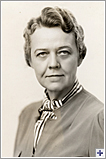 Susan Myrick |
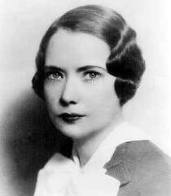 Margaret Mitchell |
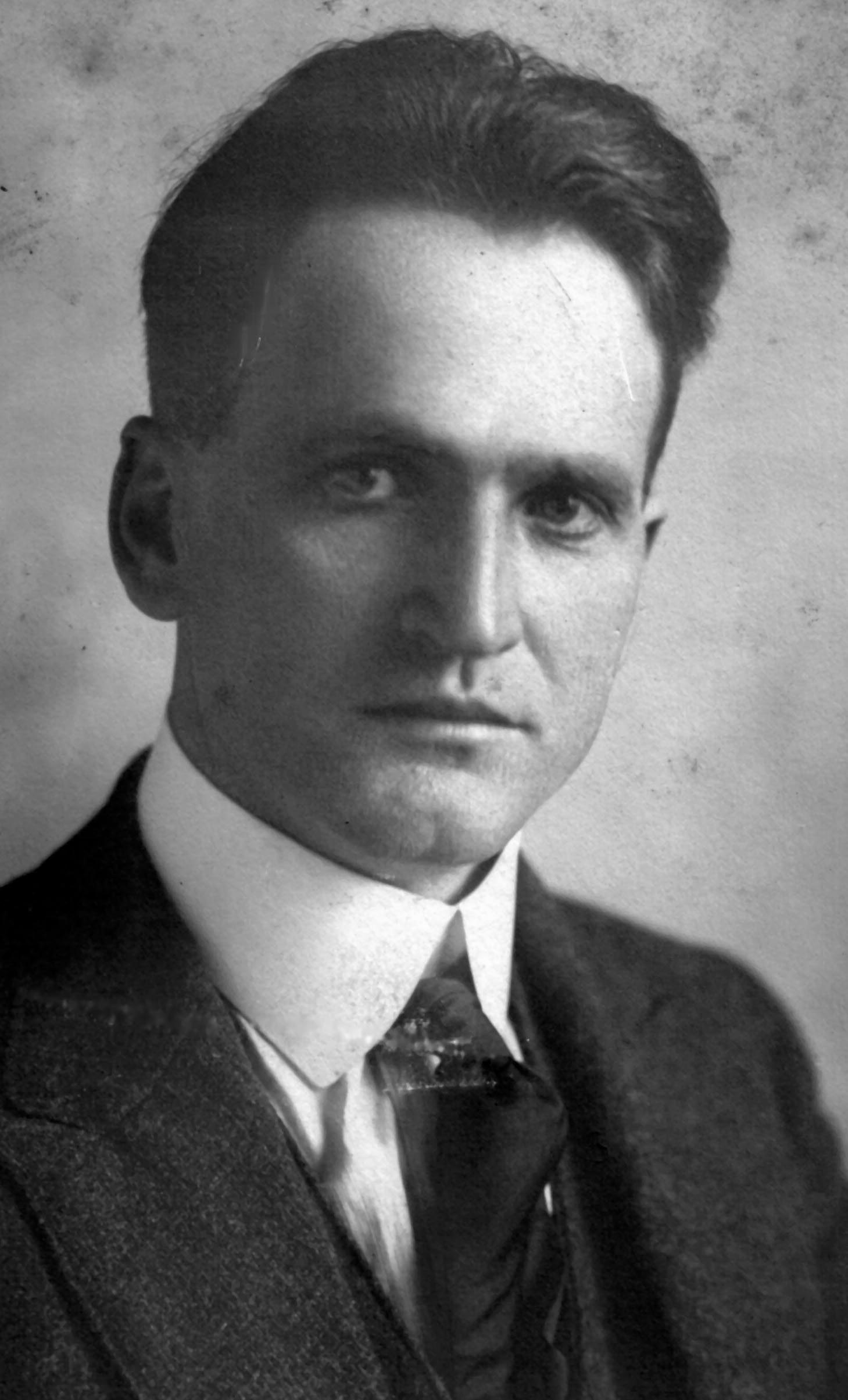 Judson Andrews |
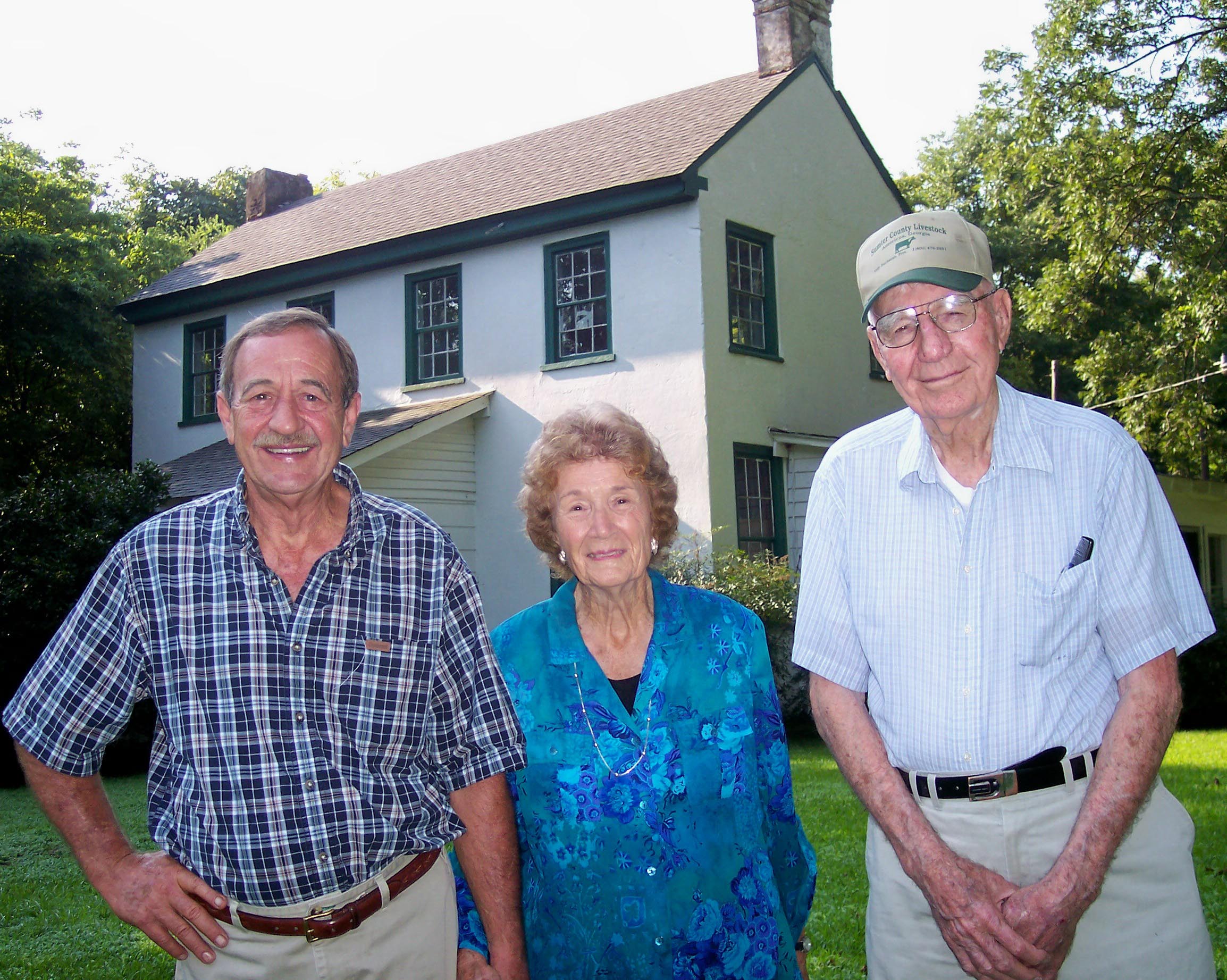
Pictured at center is matriarch and historian of
Moran, Lillian Pierson
Breedlove. She is flanked by her son, Clarence "Bubba"
Breedlove (L) and old friend,
Paul Spillers (R), a former
Crawford County Commissioner.
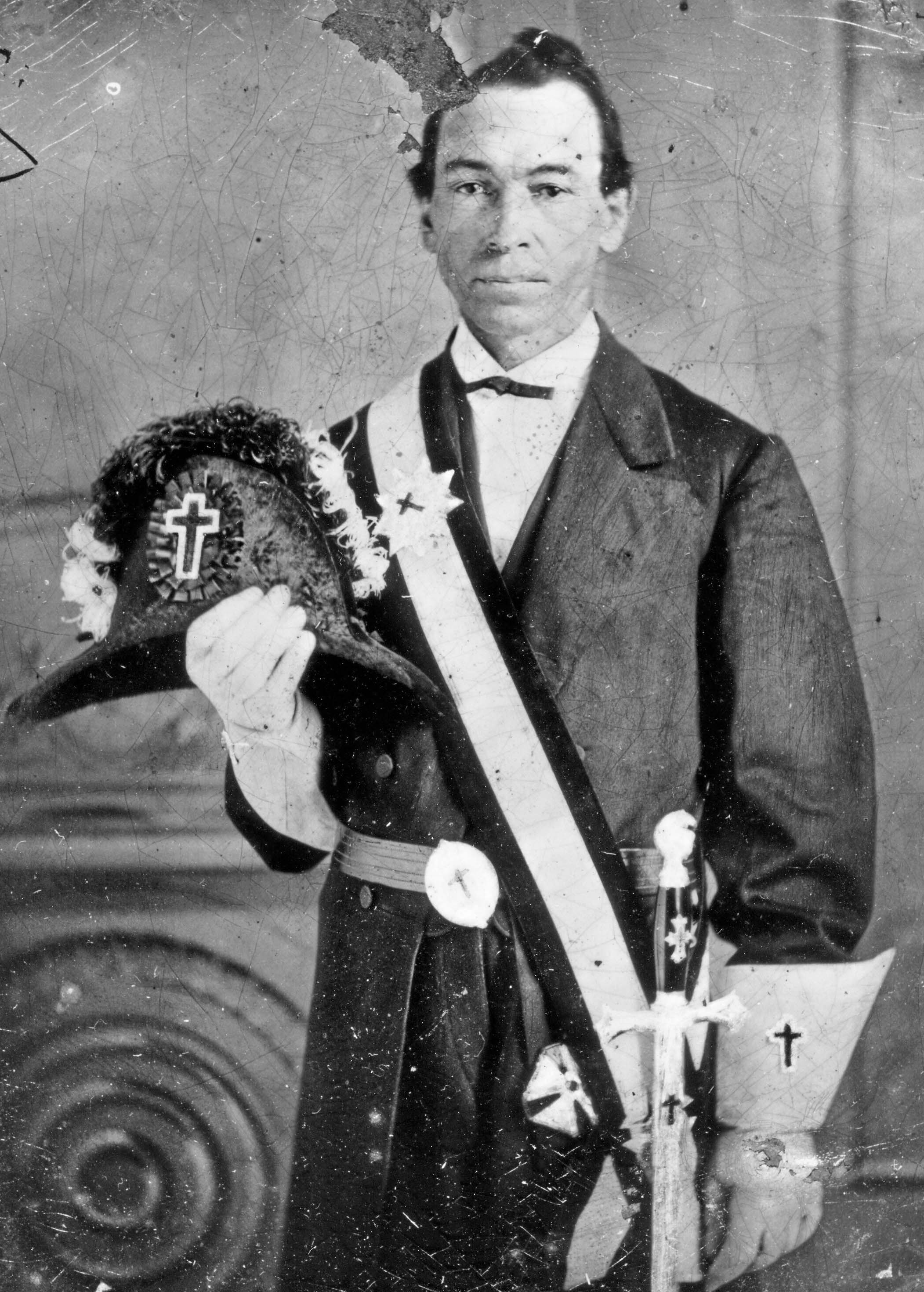 Augusts Benjamin Moran |
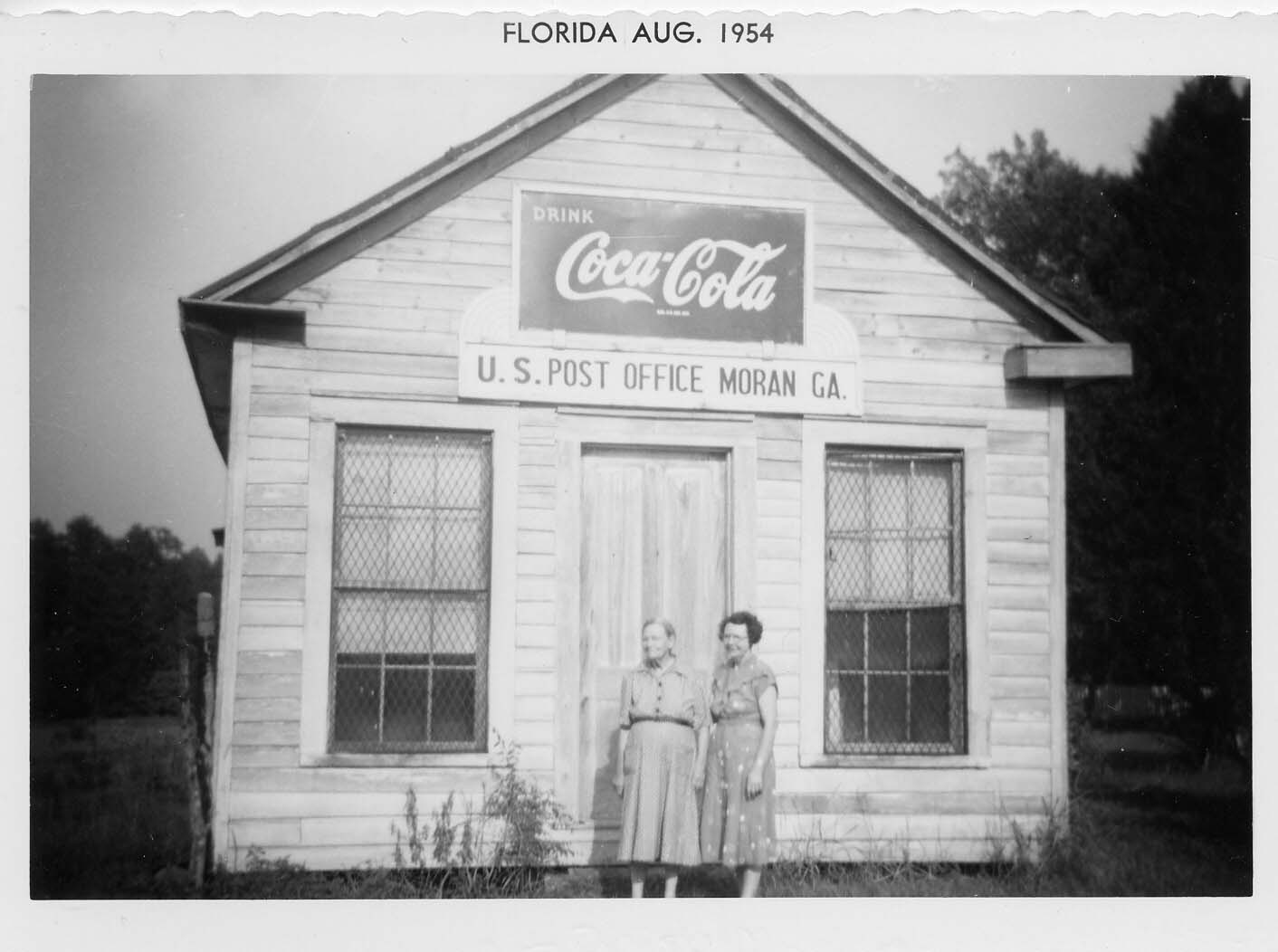 Post Office |
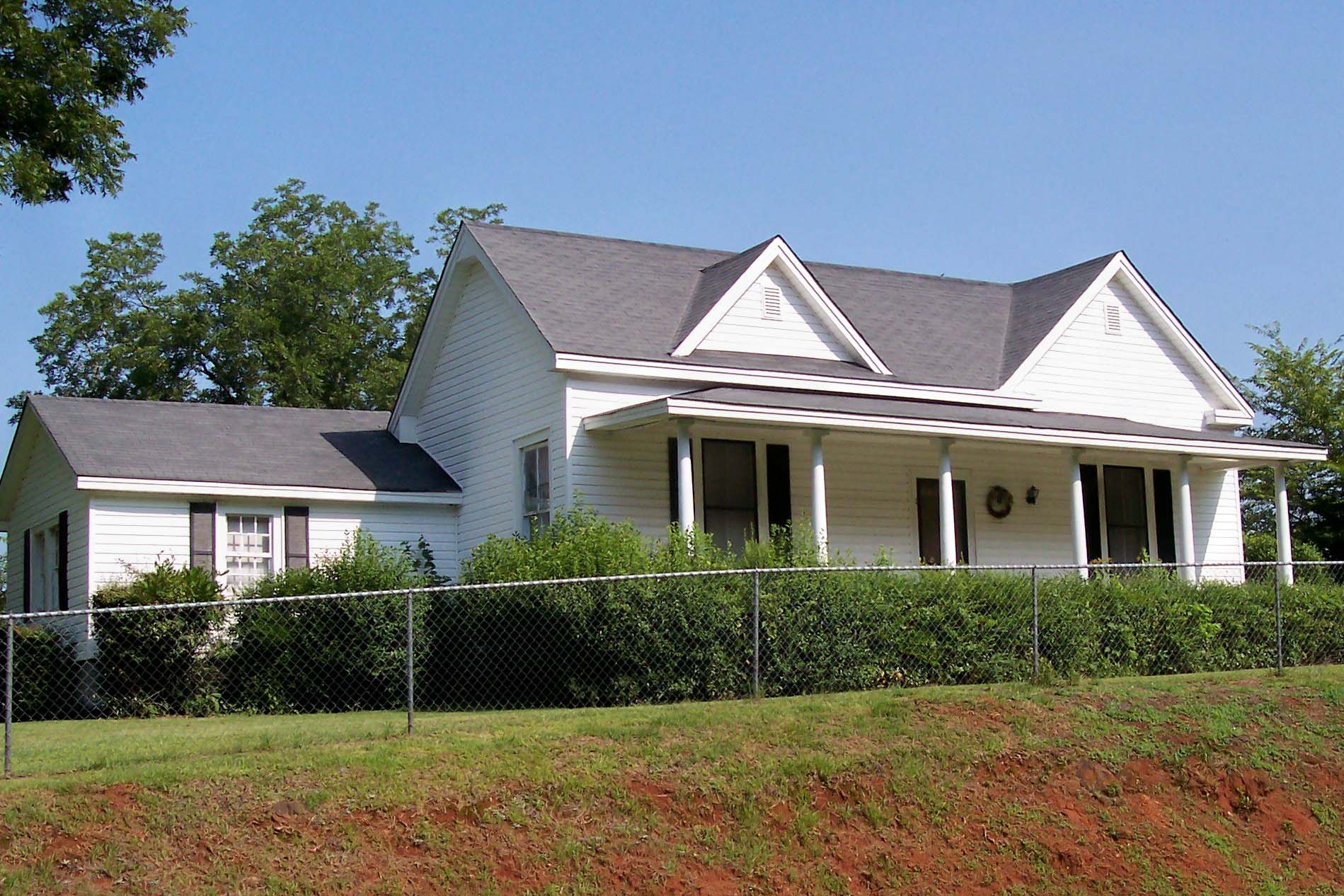 Breedlove Home |
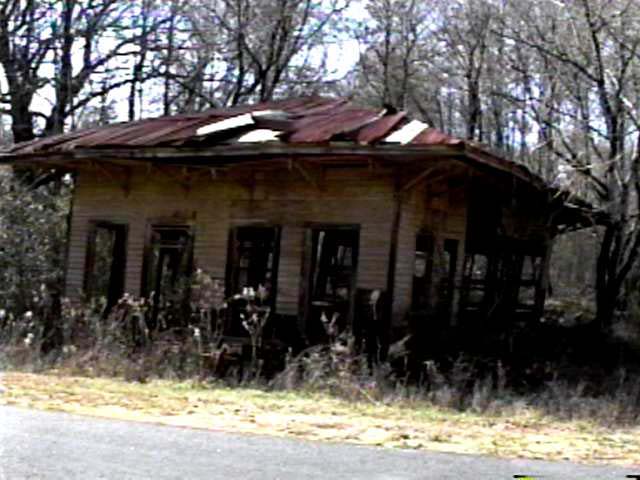 Railroad Depot |
 Moran's Tara
|
 Thomas and Alice Moran
|
This page was last updated Monday, August 16, 2010
Copyright ©
Kim Gordon ← Webmaster
All Rights Reserved