History of Crawford County: Knoxville, and Roberta
By Billy Powell
Billy Powell, author of four books and “Georgia Post” columnist, loves to research and write about local history.
Crawford County carved from Houston County
On December 9, 1822, the Georgia General Assembly created Crawford County, Georgia’s 57th county. Its land was apportioned from Houston County, whose original territory comprised land ceded by the Creek Indians in the 1821 Treaty of Indian Springs. In 1824, parts of Crawford County were used to create Upson County. In 1827, parts of Macon and Talbot Counties were added to Crawford’s borders. Crawford County comprises 326 square miles. Its population in the 2000 census was 12, 495. The 2010 population estimate is 14,000.
Crawford County was named after statesman William H. Crawford (1772-1834), a former U. S. Senator from Georgia. He also served as U. S. Secretary of War and U. S. Secretary of the Treasury, and was Georgia’s first candidate for U. S. President in 1824. Crawford was born in Amherst County, Virginia. His family moved to Appling County, Georgia, when he was a boy. Seven other states have a county named after Crawford. Also named after Crawford were Crawfordville, Georgia, and Crawford, Georgia (where he is buried).
Knoxville, the County Seat
On December 23, 1822, the Georgia legislature authorized Crawford County’s Inferior Court to select a county seat and construct a courthouse. Since Knoxville was located in the center of the county and established on the Federal Wire Road (main stagecoach and telegraph route from Washington D.C. to New Orleans), it became the natural choice. Thus, on December 10, 1823, the state legislature designated Knoxville as county seat. The house of Imlay Vansciver was used as a courtroom and for elections until the first courthouse was built circa 1825. The courthouse burned down in February 1830, reportedly an act of arson. All court and county records were destroyed. Construction of the second courthouse was completed in July 1831. Some 179 years later, the second courthouse still stands, although it has undergone extensive interior renovations and exterior repairs. Crawford County claims three justices of the Georgia Supreme Court who came to prominence in the old courthouse: Hiram Warner, Samuel Hall, and Thomas Jefferson Simmons. It now houses the Crawford County Historical Society. In 2002, a new courthouse was built one block south of the old courthouse.
Another historical landmark at Knoxville is the old jail, first built in 1832. A grand jury presentment in 1839 reported the jail was not fit for use; consequently, a second jail was erected in 1843. Forty four years later in 1887, the second jail was considered “about as dismal as a dungeon,” so a third jail was completed in 1888. This 122-year-old structure still stands.
For Whom was Knoxville Named?
Considerable confusion exists as to whom Knoxville was named for. Historians who use old records and oral tradition without authentication have written that Knoxville was named after General Henry Knox (1750-1806). Knox served in the Continental Army under General George Washington. In 1789, he became the first U. S. Secretary of War. Knox was born in Boston, Massachusetts. He retired to Maine where he was known as a grasping tyrant because of his alleged graft and corruption in assembling a vast real estate empire. He was forever immortalized in Nathanial Hawthorne's “The House of the Seven Gables.” Hawthorne wrote Knox’s character into the novel as the deceitful Col. Pynchon. Knox had counties named after him in Illinois, Indiana, Kentucky, Maine, Missouri, Nebraska, Ohio, Tennessee and Texas. He had no known ties to Georgia and had been dead 15 years when Knoxville was named, circa 1821.
Some historians contend that Knoxville was named after Hugh Knox, a stagecoach operator with a U. S. mail contract. Knox ran a stagecoach line along the Federal Wire Road from Milledgeville, Georgia, to Montgomery, Alabama. He was proprietor of a half-way house (rest stop to change horses) called the “Knox House” located between Fort Hawkins (Macon, Georgia) and Fort Mitchell on the Chattahoochee River (Russell County, Alabama). Adding credibility to this claim are the authors of “The Federal Road through Georgia.” They assert that Knoxville was named for Hugh Knox and that the village that grew up around the Knox House later became Knoxville.
Ann Royall, a freelance reporter who traveled throughout the United States, wrote an amusing account concerning the flirtatious Hugh Knox. She left Macon in a stage coach driven by Knox. Ms. Royall wrote in her travelogue that Knox became “an insolent ruffian who took some liberties with her on the stagecoach.” Ms. Royall had to flee to Fort Mitchell to escape Knox’s continual advances. In conclusion, no one knows for sure for whom Knoxville was named. It’s the reader’s choice—either the corrupt Henry Knox or the lecherous Hugh Knox.
School and Newspaper at Knoxville
Knoxville Academy opened its doors to students on January 2, 1827. Its first superintendent was William H. Burch. The first trustees were Edward Barker, William Lockhart, and C.M. Roberts.
The “Knoxville Journal” began on January 27, 1888. The publisher was Percy V. Howell. In July of 1888, as the railroad arrived, the “Knoxville Journal” published ads for property in the new railroad town one mile from Knoxville, amounting to boomtown speculation in a town yet to be named. By February 1892, the official county newspaper was the “Crawford County Herald.” It was published in Roberta, not Knoxville.
Demise of Knoxville
The Atlanta &Florida (A&F) Railroad circumvented Knoxville during the late 1880s, routing its rails one mile southwest of Knoxville. Many said that Knoxville was bypassed due to local opposition to intrusion of the railroad. Knoxville, at the time, had a population of 200 residents and had expected to increase to 3000. The miss of a single mile doomed Knoxville to obscurity. Knoxville inhabitants began migrating toward the new railroad station, which became Roberta in 1890. As the years rolled by, Knoxville ceased to function as a town. The inevitable happened on July 1, 1995. Knoxville lost its municipal charter granted 170 years earlier on December 28, 1825. Knoxville was among 100 small or inactive Georgia towns that lost their charters, leaving only Crawford and Echols counties having an unincorporated community serving as county seat.
Roberta: the “New Knoxville”
The county seat of Knoxville was a thriving community for over 60 years: from its creation in 1822 until the A&F railroad came through Crawford County during the late 1880s. When the railroad bypassed Knoxville in 1888 and built a freight depot and passenger station one mile southwest, Knoxville’s fortunes began to change. Its inhabitants began migrating toward the new community--called “New Knoxville.” Because Hiram McCrary gave the railroad the rights to come through his land, he was given the honor of giving “New Knoxville” a permanent name. McCrary named it Roberta in honor of his young daughter. McCrary later served as railroad station agent. In 1910, Roberta was officially incorporated as a city and its boundaries extended 1200 yards in every direction from the center of town. Roberta’s first mayor was A. J. Danielly. The first town council comprised J. W. Matthews, J. W. Melpass, Frank Danielly, W.W. Jordan, and Jonathon Wilder. Roberta will observe its 100th anniversary with a big celebration on 25 September 2010.
Reversal of Fortune
With the advent of the railroad (1890s) and subsequent construction of U. S. Highway 341 (1930s), Roberta became a booming tourist town. Numerous hotels, restaurants, and gas stations sprang up to accommodate the increased traffic flow. Then came a reversal of fortune: passenger rail service ceased (late 1940s) and Interstate Highway 75 bypassed Roberta (late 1950s). Consequently, Roberta regressed into the role of a slower-paced southern community.
Famous personages from the past
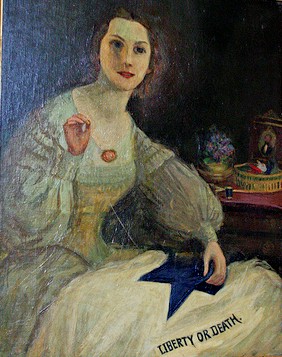
Joanna Troutman (1818-1879) was born February 19, 1818, in Crawford County. She designed and stitched the Lone Star Flag adopted by the State of Texas. In 1835, she presented it to a battalion of Georgia volunteers marching west to assist Texas in its fight for independence against Mexico. “Atlanta Journal” article by Stiles A. Martin, dated Sept. 20, 1931, described Troutman’s involvement:
Joanna Troutman died in 1879. She was buried alongside her first husband, Solomon Pope, at Elmwood Plantation (off Avera Rd.) in Crawford County (see cemetery desecration in 28 Jan 2010 issue of “Georgia Post”). In 1913, Texas governor Oscar B. Colquitt, received permission to exhume Joanna’s remains and to transport them to Texas. Joanna was reinterred in the Texas State Cemetery in Austin, Texas, where a statue was erected in her honor. The governor commissioned an oil painting of Joanna that still hangs in the Texas state capitol.
Colonel Benjamin Hawkins (1754-1816) was born in North Carolina. He was a colonel in the Revolutionary War, a member of the Continental Congress, and a U.S. Senator. In 1796, President George Washington appointed him Indian Agent for all tribes south of the Ohio River. Hawkins and his family arrived in Crawford County, circa 1800. Soon thereafter, Hawkins built on the Flint River a Creek Indian Reservation (five-square-mile compound), which is now part of Crawford County. Earlier, Hawkins had built Fort Hawkins on the Ocmulgee River at Macon. Hawkins lived 16 years at the Creek Indian Reserve until his death on June 6, 1816.
John Pemberton (1831-1888), a druggist and the inventor of Coca-Cola, was born near Knoxville, Georgia, on January 8, 1831.
Jefferson Franklin Long (1836-1901), a person of mixed African and Caucasian ancestry, was born into slavery in Knoxville on March 3, 1836. As a freedman after the Civil War (1861-65), he became a tailor, but an avid interest in equal rights led him to politics. He served in Congress during the early 1870s and became the first African American to speak from the floor of the U.S. House of Representatives. Long did not seek reelection, but served as a delegate to the Republican National Convention in 1880. He resumed his tailoring business in Macon, Georgia, and died there on February 4, 1901. He was interred in Lynwood Cemetery.
Alexis de Tocqueville (1805-1859), a French political thinker and historian, visited Knoxville in 1832 as part of his tour of America which he would eventually describe in his famous book, “Democracy in America.”
Appreciation is extended to Sidney Goodrich, Crawford County historian, and Gordon Smith of Savannah, a noted historian and attorney, for providing information for this story.
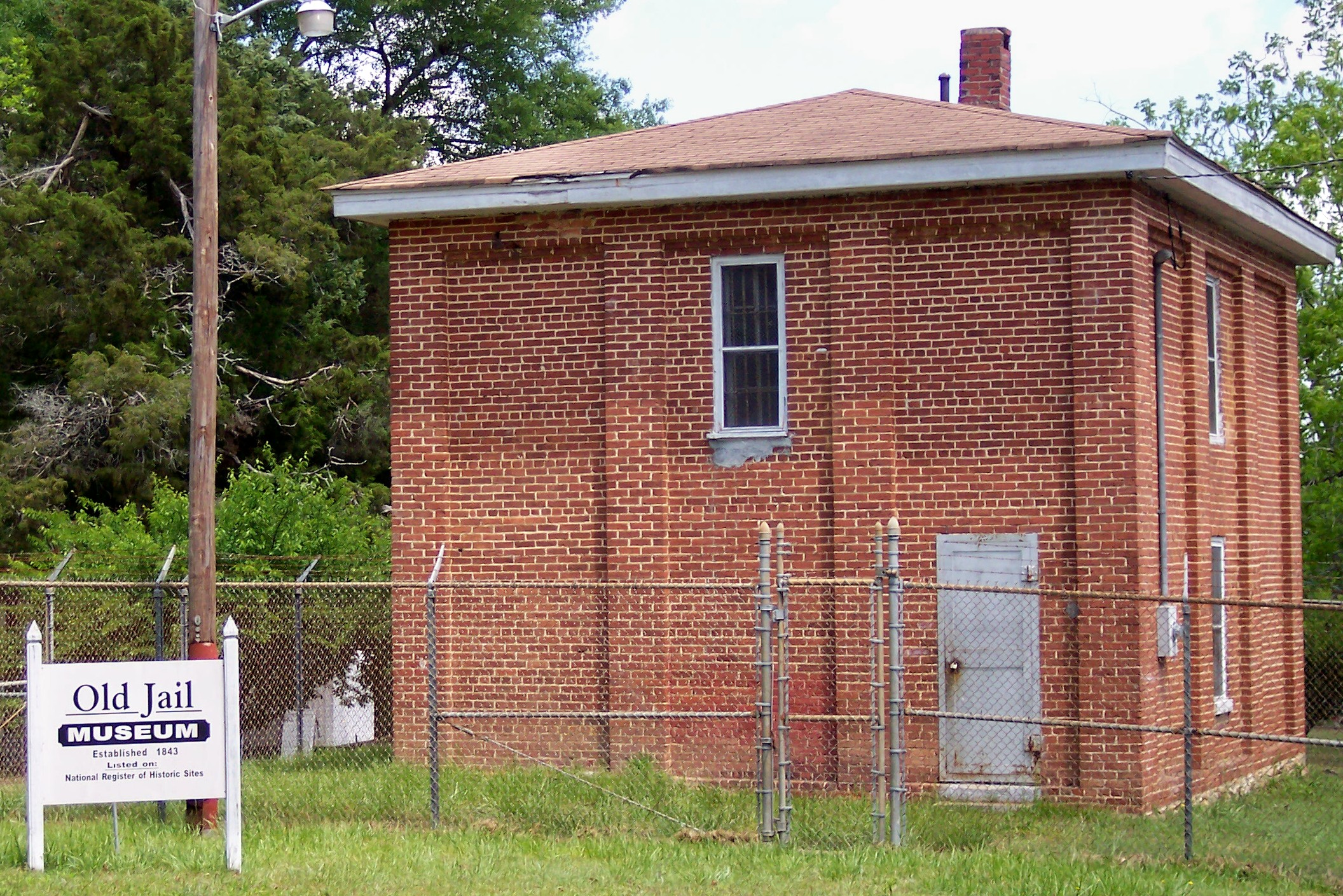 Old Jail |
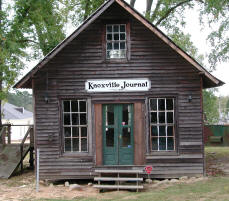 Knoxville Journal |
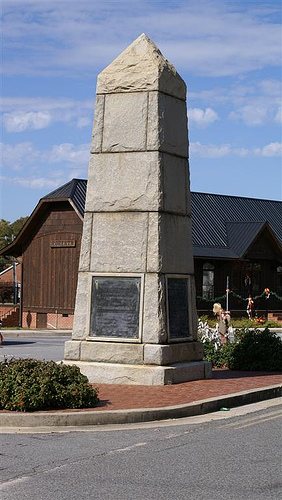 Banjamin Hawkins Monument & Train Depot |
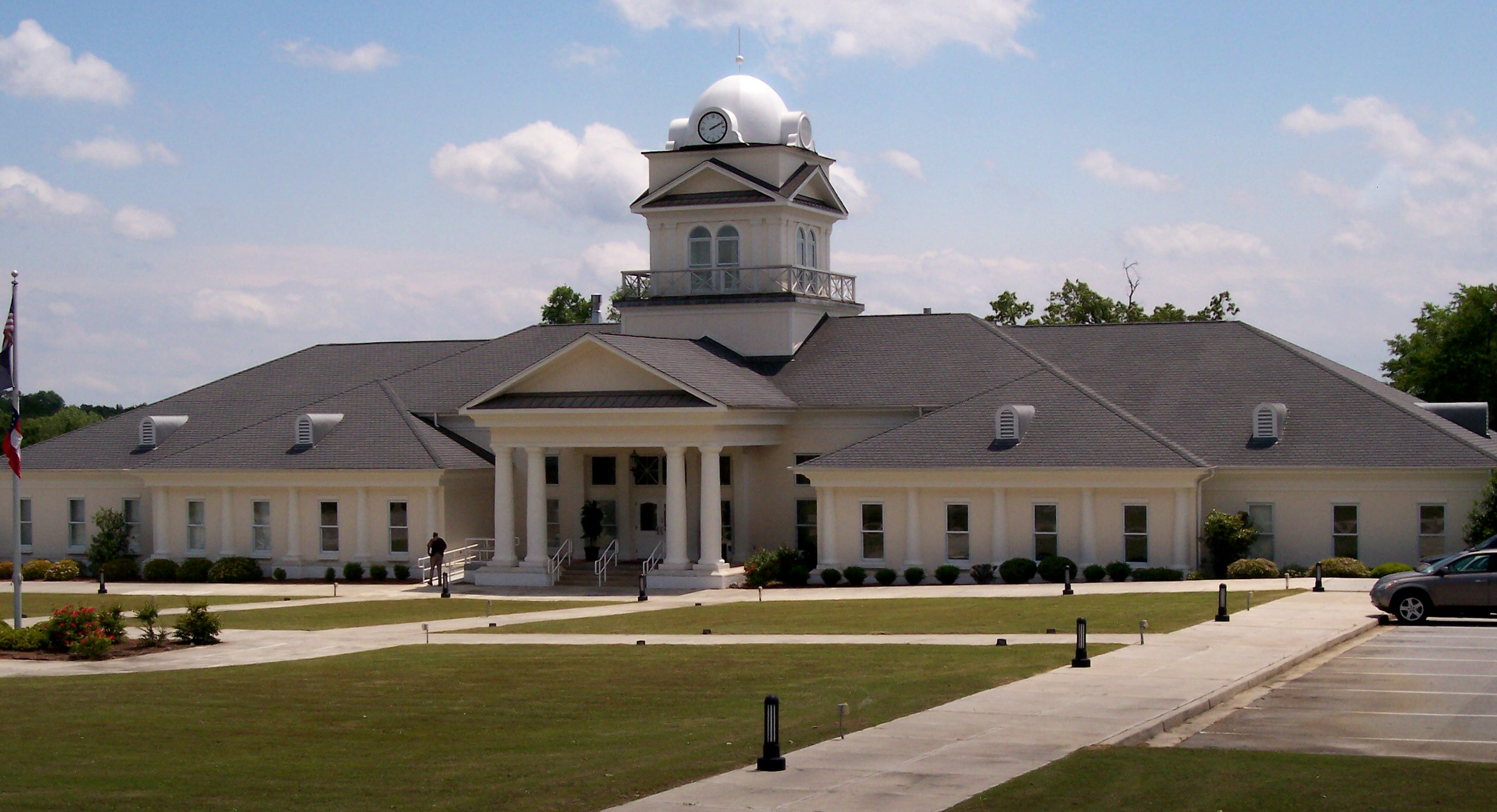 New Crawford County Courthouse |
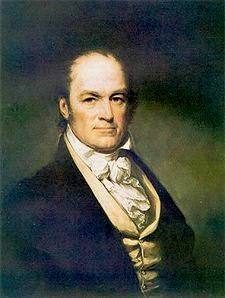 William Harris Crawford |
Joanna Troutman painting |
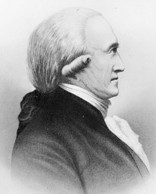 Benjamin Hawkins |
 Jefferson Franklin Long |
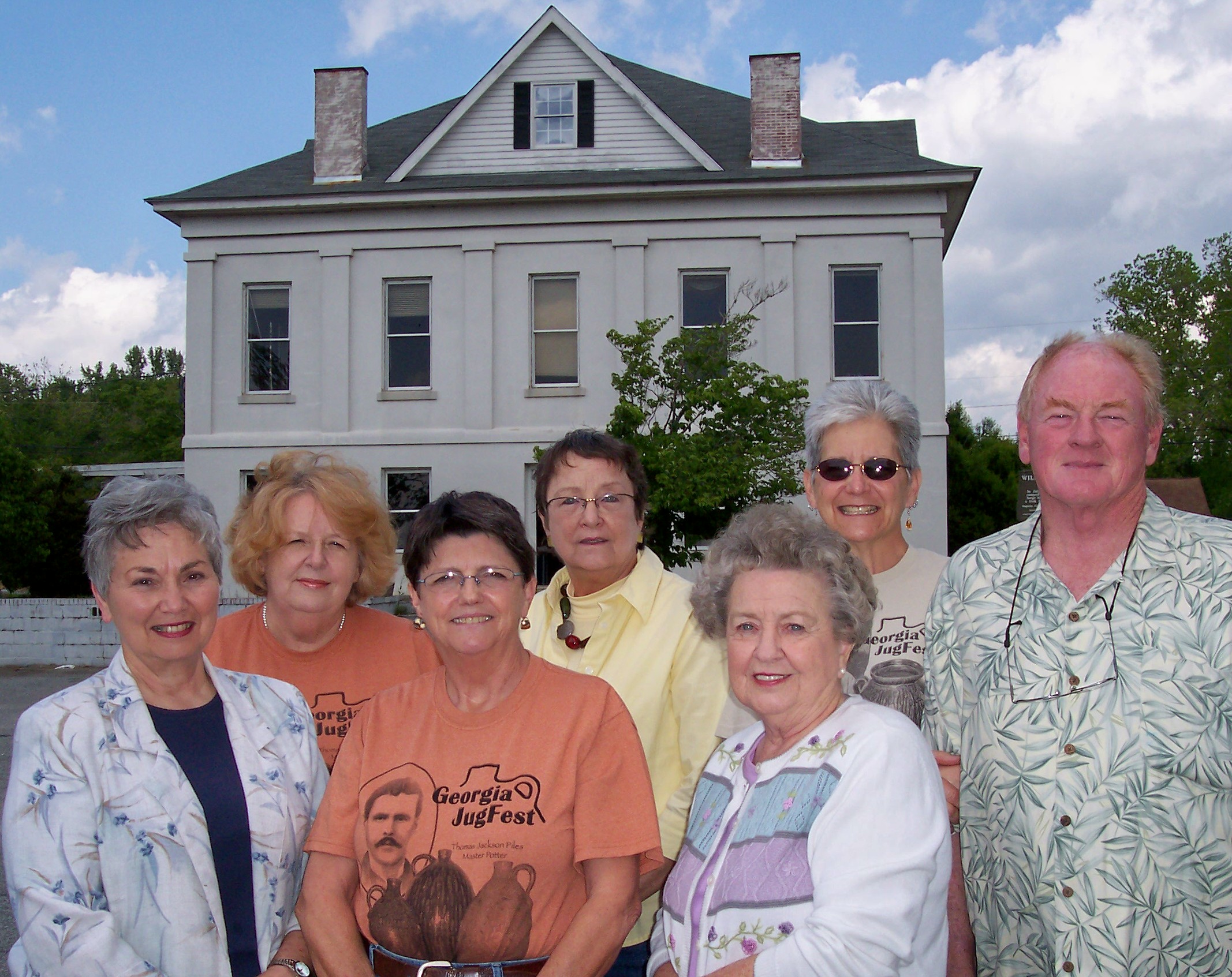 Historical Society members at old Knoxville courthouse. L-R: Nita Walker, Mona Lowe, Elaine Westberry, Martha Carter, Betty Harris, Robin Dunaway, and Pat Roys. |
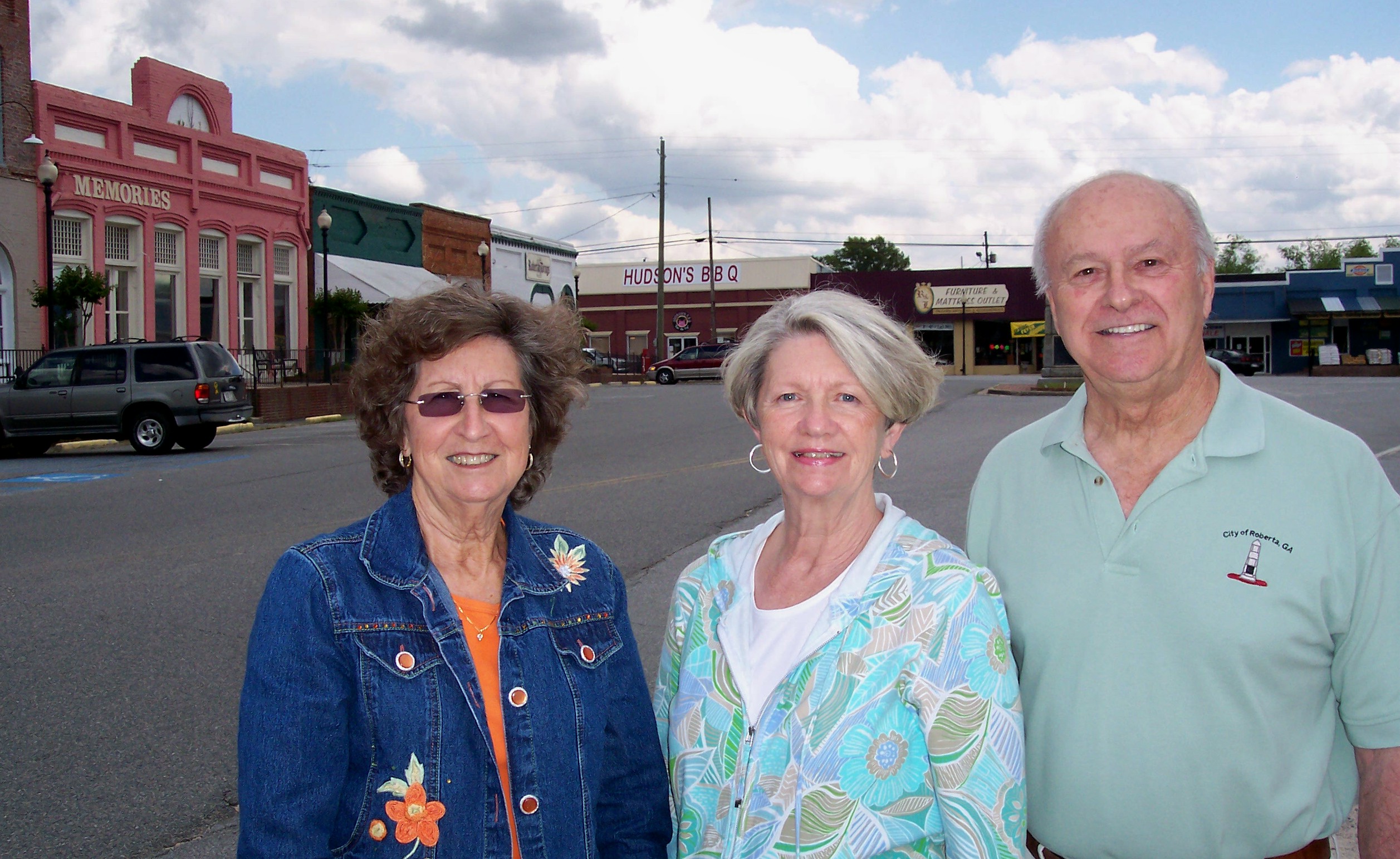 In downtown Roberta are Mayor Becky Smith (C), and City Council members, Arnita Harris (L), and Erv Patton (R) |
Four counties of Georgia were organized by an act approved December 23, 1822, viz., Dekalb, Bibb, Pike, and Crawford; and, for the last named of these counties, the site of public buildings was fixed at a convenient place called Knoxville, in honor of General Henry Knox, of the Revolution. The town was incorporated on December 24, 1825, with the following pioneer residents named as commissioners; John Harvey, John Vance, Frank Williamson, Jesse Stone, and Martin T. Ellis. At the same time, a charter was granted to the Knoxville Academy, with Messrs. James Lloyd, Coleman M. Roberts, Edward Barker, Levi Stanford, and William Lockett as trustees. Miss, Joanna E. Troutman, who designed the Lone Star Flag of Texas, was a resident of Knoxville, where she was living when the war for Texan Independence began in 1836.
From Georgia's Landmarks, Memorials and Legends, 1997.
This page was last updated Wednesday, April 16, 2025
Copyright
© Kim Gordon Webmaster
All Rights Reserved