THROUGH
MOUNTAIN MISTS
Early Settlers of
Their
Descendants...Their Stories...Their Achievements
Lifting the
Mists of History on Their Way of Life
By: Ethelene Dyer Jones
|
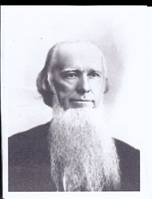
Driving along Georgia Highway 60
near Woody
Gap School, you see a Georgia Historical Marker announcing “Homesite of
Joseph
Emerson Brown.” Stopping to read it, you
find that Joseph Emerson Brown, four-time governor of Georgia, lived
with his
parents at about the same location where the school is today.
We like to take pride in claiming that
famous people lived here—or, for that matter, “slept here.” Once a citizen of
What can we
learn about this tall, lanky
man whose pictures remind us somewhat of Abraham Lincoln, except that
Brown’s
beard was white?
He was not born in
That opportunity came when Joseph
Emerson Brown was nineteen. In 1840, his
father gave him two oxen that evidently had been yoked together and
trained for
work on the farm. Brown took the oxen
and his meager belongings and left, dressed in a suit his mother made
for him
from wool from the Brown’s own sheep. He
made his way over the mountains to
When he finished at
Then came the next lap in his
educational journey. He went to Yale
University School of Law, graduating in 1846 with a Bachelor of Law
degree. He had borrowed money to attend
Yale from a friend and physician in
He opened his law practice in
His courtship with Elizabeth Grisham
began. She was a daughter of a Baptist
minister. They were married in 1847. To them were born eight children:
Julius, Mary, Joseph, Franklin, Elijah,
Charles, Sally and George. Their son,
Joseph Mackey Brown, would later follow in his father’s footsteps and
serve as
Governor of Georgia (1909-1911 and 1912-1913).
Joseph Emerson Brown’s political
career began actively when he was elected to the
His next big political move came when
he was elected governor of
Vital to the economy prior to the
Civil War and essential to the war effort during the conflict, the
railroad was
one of Governor Brown’s chief projects.
He replaced top management positions in the Western &
Atlantic
Railroad as well as minor officials.
Many who received railroad jobs were his staunch supporters. He advised the superintendent to “cut all
unnecessary expenses, but to keep the railroad in good repair.” He also wanted unnecessary employees
dismissed and to pay salaries commensurate to those paid by other
railroads. Intoxicating beverages were
not allowed. Strict obedience to the
rules concerning operation of the railroad was to be followed. The rules were printed, posted and also
delivered to all employees.
{Next:
More on Governor Brown and on his post-war political career.}
c2004 by
Ethelene Dyer
Jones; published March 11, 2004 in The Union Sentinel, Blairsville,
GA.
Reprinted by permission. All rights reserved.
[Ethelene Dyer
Jones is a retired educator, freelance
writer, poet, and historian. She may be reached at e-mail edj0513@windstream.net;
phone 478-453-8751; or mail 1708 Cedarwood Road, Milledgeville, GA
31061-2411.]